
What is lampshading in fiction?
Lampshading in fiction is where the writer points out an implausibility, coincidence or contradiction within the narrative, often in the hope that acknowledging it will make the reader accept it.
Two characters discuss the events of the book they are in. They say things like:
‘Isn’t it a wonderful coincidence that a world-renowned detective should happen to be holidaying incognito just as a remarkably convoluted murder takes place?’
Or
‘This plan doesn’t make any sense!’
‘I know, but it’s our only hope, so let’s do it!’
Or
‘Isn’t it odd that we have nothing in common and come from different worlds but in three days we’ve somehow become incredibly close?’
Well, yes, it is odd. The reader noticed, the author noticed, and the characters didn’t just notice but commented on it.
But no, identifying this kind of issue with a manuscript is not the same as solving it.
The author has noticed that the reader might question something, so raises it themselves via one of the characters, hoping this will pre-empt the reader’s objection. But instead the reader thinks ‘Yes, I was about to say! Soooo, since we all agree there’s a credibility problem here, why is it still happening?’
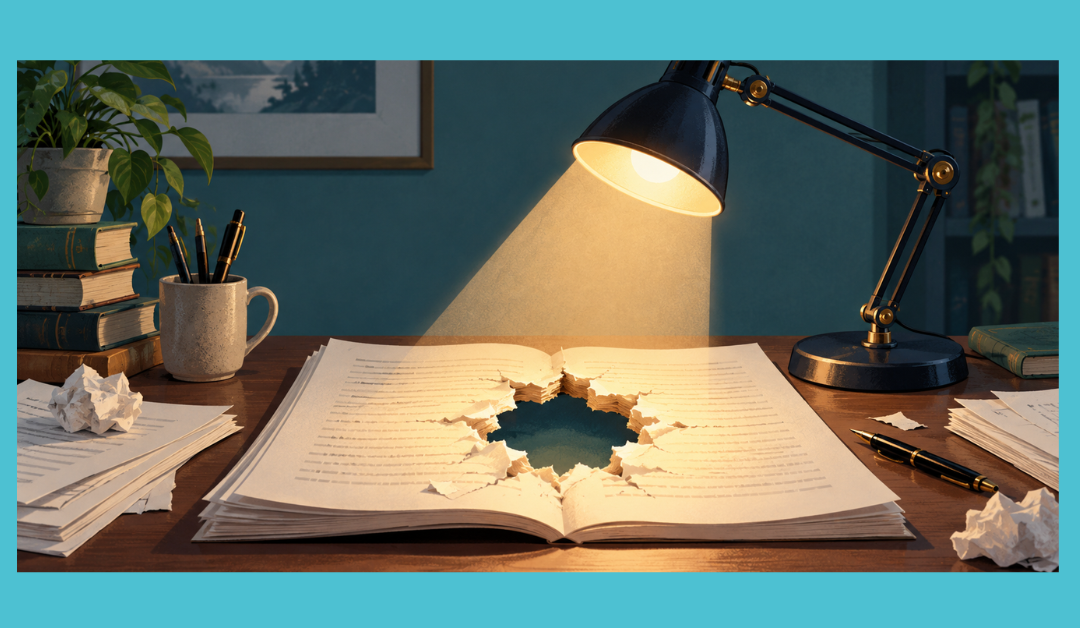
If anything, this kind of lampshading makes the weakness more conspicuous – just as if the writer switched on a powerful desk lamp and aimed it directly at the hole in the plot.
When lampshading works
There are times when lampshading an apparent contradiction, implausibility or coincidence not only works but provides a delightfully meta commentary (and it may be for this that some writers are reaching when they use it poorly).
When used well, especially in comedy or satire, a lampshaded implausibility will often comment on an absurdity of the genre. The reader recognises that the author is sharing a joke with them and willingly continues on.
For example, Terry Pratchett made brilliant use of lampshading in the Discworld series. In Guards! Guards!, the officers of the Watch attempt to arrange matters so their efforts to kill the dragon will have exactly a million-to-one chance of succeeding – because everyone knows million-to-one chances work nine times out of ten. Then they worry that their calculations are too imprecise, and if the odds turn out to be only 999,999 to one, maybe it won’t come off. This is lampshading that works, because the absurdity becomes the joke.
Likewise, a cosy mystery series might have a recurring joke about the number of murders happening in one small village, and readers will usually accept this kind of lampshading, because it’s an acknowledged genre convention that doesn’t need repairing, so the writer can wink at the audience about it, and then move on.
Lampshading that doesn’t work is, for example, when the plot rests on the relationship between two characters who have nothing in common and no prior relationship, but we are expected to believe they are drawn to each other just because sometimes people form surprising attachments.
In such a case, you’re going to need to do more than have them say ‘Isn’t it strange how we have no reason to care about each other, yet in three days we’re now close enough to take substantial risks for each other?’
Pointing out the lack of motivation for such a relationship won’t backfill that missing ingredient – it will merely highlight that the central relationship doesn’t work.
Lampshading that works is basically the author and reader sharing a joke: we all know the thing is absurd, and that’s part of the fun.
Lampshading that doesn’t work is the author acknowledging the thing doesn’t make sense, and trying to pretend the acknowledgment is enough to fix it.
How to tell if lampshading is hiding a story problem
If one of your characters points out something unlikely in your story, ask yourself a few questions:
- Is there an explanation for this apparent implausibility?
- Is there a believable reason for it provided via character, motivation or setup?
- Is the lampshading adding humour, insight or commentary?
- Am I using the character’s observation to voice the reader’s complaint before the reader can, thereby hoping to get away with a story problem?
Because if your character can see the problem, that’s good. That means you can see it too.
Now you can switch off the lamp and fix it.
Can you see something isn’t working in your manuscript, but aren’t sure how to fix it? A manuscript assessment can identify what’s missing—and help you decide what to do next.


